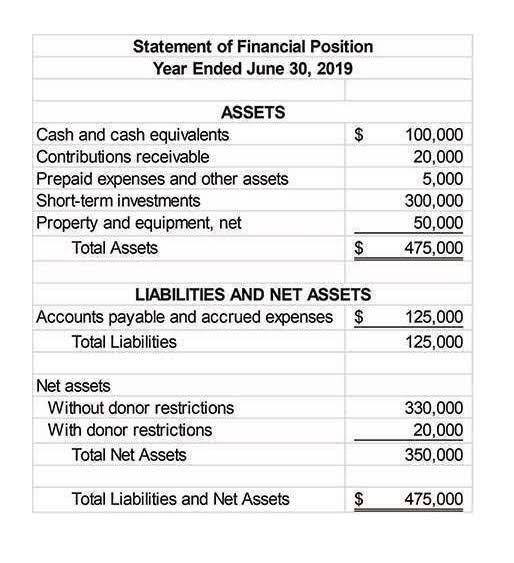
Retained earnings are like a running tally of how much profit your company has managed to hold onto since it was founded. They go up whenever your company earns a profit, and down every time you withdraw some of those profits in the form of dividend payouts. In financial terms, a lot of retained earnings mean a company https://www.escueladeartesvocales.cl/2020/12/15/phoenix-cpa-pros-arizona-accounting-firm/ can invest in itself. GAAP sets the rules for showing retained earnings clearly and consistently. For example, a tech start-up might use retained earnings to hire more salespeople or for research. They skip large dividends, expecting these investments to pay off later.
Complete the Year-End Close in Business Central Successfully
This means every shareholder receives USD 5 in dividends for each share they own. Just rerun the Close Income Statement to include accounting them in retained earnings. After setting up 2026, run your January trial balance immediately. It is a quick way to confirm your retained earnings rolled forward correctly. It is a small step that gives you a clean record for auditors or future reviews.
Quantum leap Q-Day arrives early, crashing crypto and destabilizing world finance
The company begins with $100,000 in retained earnings in 2022, and then generates $25,000 in net income during the year. As a result, the company’s retained earnings balance increases to $120,000 at the end of 2022. Depending on your goals, you can look at retained earnings in a few different ways to gain insight into a company’s overall financial health.
- By plugging in the values for these components, you can easily calculate your company’s retained earnings.
- Look under shareholders’ equity in the balance sheet’s equity section.
- Retained earnings at the beginning of the period are actually the previous year’s retained earnings.
- Let’s look at a retained earnings example that matters to small business owners.
How to calculate dividends from the balance sheet

However, if you determine that you can’t achieve a sufficient return on these retained earnings, you might choose to distribute them as dividends or conduct share buybacks to reward your shareholders. This approach balances reinvestment with providing returns to those who have invested in your company. When calculating retained earnings, you need to account for all dividend payouts by subtracting them from your earnings.

Net income VS retained earnings
- When analyzing a company’s retained earnings, it’s important to place them in context.
- This figure plays a vital role in assessing a company’s financial health, as it shows how much profit is available for reinvestment.
- This essentially refers to the business’ net profit generated during the period, after subtracting business expenses from your revenue.
- Management policies, research and development, cost efficiency, capital expenditures, and growth opportunities all shape the amount of retained earnings a company can accumulate over time.
- Let’s say that the net income of your company for the current period is $15,000.
- A lower payout ratio often indicates that the company prioritises growth, while a higher ratio might suggest a focus on returning profits to shareholders.
Let us help you understand how you can calculate the impact of both cash and stock how to calculate retained earnings dividends. A negative balance, also known as retained losses, suggests that you’ve paid out more in distributions to shareholders than you’ve earned in profits, or you’ve consistently experienced net losses. In a nutshell, retained earnings are what’s left over from your profits after you’ve paid out dividends, and you decide to save some money for the future of your business.